
Every institution has a beginning.
For the Impact Storytelling for Development Initiative (ISDI), that beginning was not a board meeting, a funding opportunity or the decision to register a nonprofit. It began with a question that refused to leave my mind:
Who tells the stories behind development?
Looking back, I realise the answer did not come in a single moment.
For more than a decade, I worked as a journalist covering governance, public policy and community affairs. Alongside my newsroom experience, I had the privilege of working on development communication projects that exposed me to agriculture, livelihoods and social development programmes. I also sought opportunities to strengthen my skills, including participating in a two-week Solutions and Data Journalism training at the School of Media and Communication, Pan-Atlantic University, where I deepened my understanding of evidence-based reporting and solutions-focused journalism.
Those experiences changed how I viewed journalism. They taught me that good reporting should not only explain problems but also examine responses, context and measurable change.
Still, I had not yet imagined creating an institution.
That changed in October 2025.
I was invited by the United Nations Development Programme (UNDP) to participate in the Media Workshop on Ethical and Data-Driven Journalism for Youth Employment Reporting under the Nigeria Jubilee Fellows Programme (NJFP)—a flagship initiative of the Federal Government of Nigeria implemented in partnership with UNDP and funded by the European Union.
The workshop brought together journalists from across Nigeria to strengthen ethical, accurate and data-driven reporting on youth employment and sustainable development.
As a journalist, I expected to learn new reporting skills.
What I did not expect was that the workshop would change the direction of my professional life.
One of the speakers was Tolani Alli, renowned visual storyteller and former official photographer to Nigeria's former Vice President, Professor Yemi Osinbajo.
“We are the architects of our own narrative.”
Those words challenged me to think beyond reporting events.
They challenged me to think about storytelling as a tool for shaping understanding, preserving history and influencing how societies remember change.
But another moment during the workshop would have an even greater impact.
The organisers encouraged participating journalists to independently identify graduates of the Nigeria Jubilee Fellows Programme and document what had happened after their fellowship. The assignment was not to report on the workshop or the programme itself, but to find former fellows, listen to their experiences and tell the stories of how the intervention had influenced their lives.
That simple suggestion changed everything.
As I reflected on the assignment, I realised something that had been hiding in plain sight.
Across Africa, governments, development agencies, foundations and civil society organisations invest billions of naira and millions of dollars every year in programmes designed to improve lives. They build schools, support farmers, train young people, strengthen healthcare systems, promote climate resilience and empower communities.
- They also measure their work.
- They produce reports.
- They collect data.
- They document outputs.
- They publish statistics.
But I found myself asking a different question.
The more I reflected, the more I realised that while development organisations often have the numbers, many of the human stories behind those numbers remain underreported.
The statistics tell us what happened.
People's experiences tell us why it mattered.
That was the moment everything became clear.
I wasn't looking at a gap in journalism.
I wasn't looking at a gap in development.
I was looking at a gap between evidence and storytelling.
I realised there was room for an institution dedicated to documenting sustainable development through rigorous, evidence-based and human-centred storytelling—an institution that would preserve lessons, amplify community voices and communicate measurable change in ways that inform, inspire and influence action.
That idea became the Impact Storytelling for Development Initiative (ISDI).
ISDI was founded on a simple belief:
Development deserves more than statistics.
- It deserves stories that are accurate.
- Stories that are evidence-based.
- Stories that honour the dignity of people.
- Stories that preserve lessons for future generations.
Today, every story we produce is guided by the same question that first emerged in Abuja:
What changed?
We believe that every development intervention has two stories.
is the story of implementation.
is the story of impact.
The first explains what was done.
The second explains what changed.
ISDI exists to tell the second story.
Our ambition extends beyond publishing stories.
We are building an African institution that documents development through journalism, documentary filmmaking, photography, research and strategic communication. We hope to strengthen accountability, preserve Africa's development memory, build the capacity of a new generation of impact storytellers and ensure that evidence of change is never lost.
Because behind every statistic is a person.
Behind every intervention is a story.
And behind every story is an opportunity to inspire better development.
That is the journey we have begun.
And this is only the beginning.
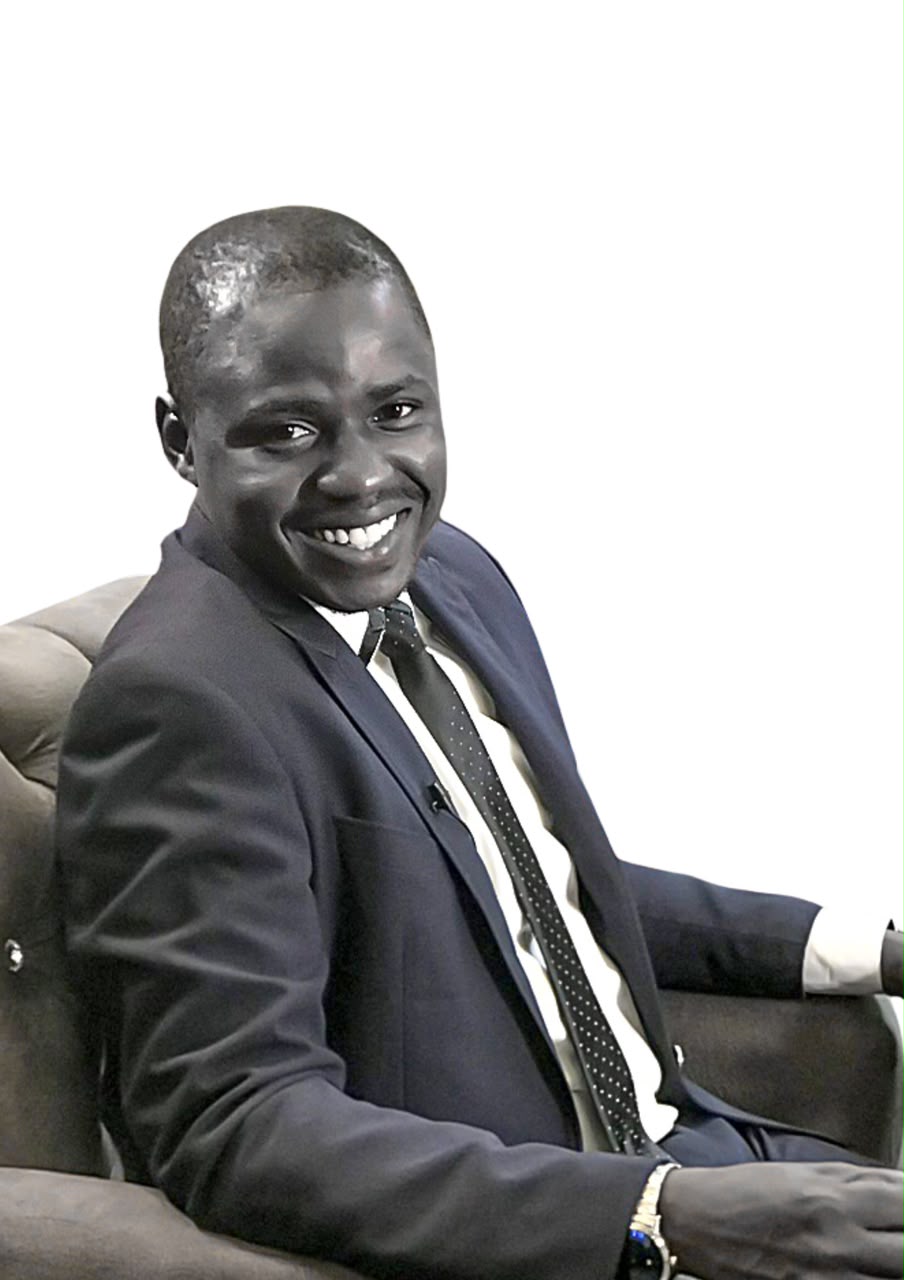
Ibrahim Ayyuba Isah
Founder & Executive Director
Impact Storytelling for Development Initiative (ISDI)